230 kV Autotransformer
Emergency Replacement
A 230 kV transmission autotransformer suffered a catastrophic failure during the peak of Florida’s summer load season. Southern Switch mobilized the following morning, coordinating crane operations, removing the destroyed unit, transporting the replacement from the utility’s spare storage at a regional generating plant, completing the installation, and performing full apparatus testing before the unit returned to service.
Worst time.
Worst unit to lose.
June in Florida is not a month when any utility can afford a transmission-class transformer out of service. Air conditioning load runs at its annual peak, grid margins are thin, and every MW of capacity counts. A 230 kV autotransformer is not a unit you bypass or work around, it is a critical node in the transmission network, and losing it strains capacity across the surrounding grid.
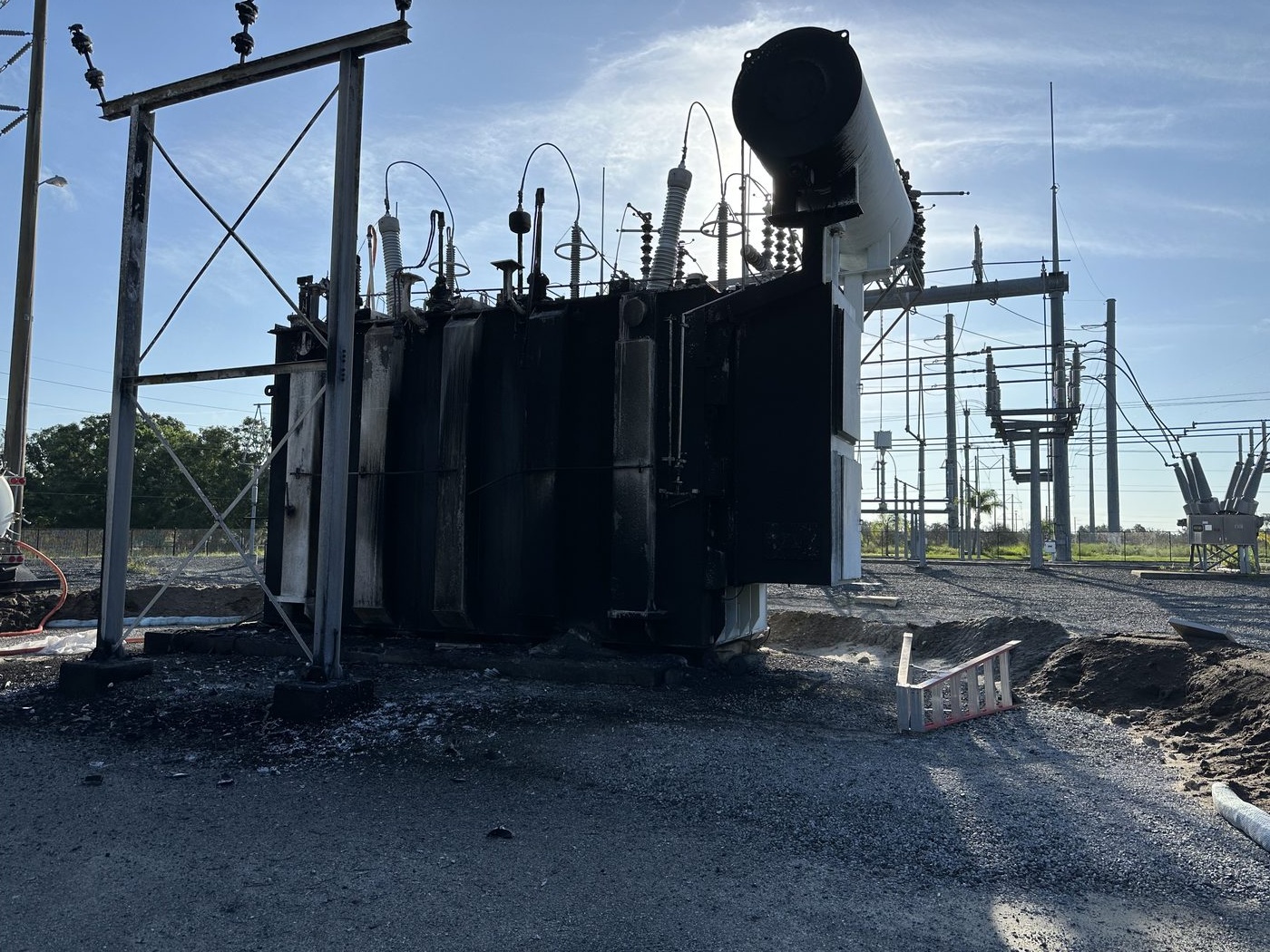
The unit suffered severe thermal damage. What remained on the pad was not a candidate for repair or refurbishment, the only path back to service was a replacement unit, moved and installed as fast as possible.

Not a swap,
a full teardown and rebuild.
The utility contacted Southern Switch following the failure. Southern Switch confirmed mobilization for the following morning. The scope was significant: a 230 kV autotransformer in spare storage doesn’t sit on a truck and drive to a new site. It has to be completely disassembled, bushings, conservator, radiators, all external components removed, transported, then fully reassembled and tested at the installation site before it can be energized.
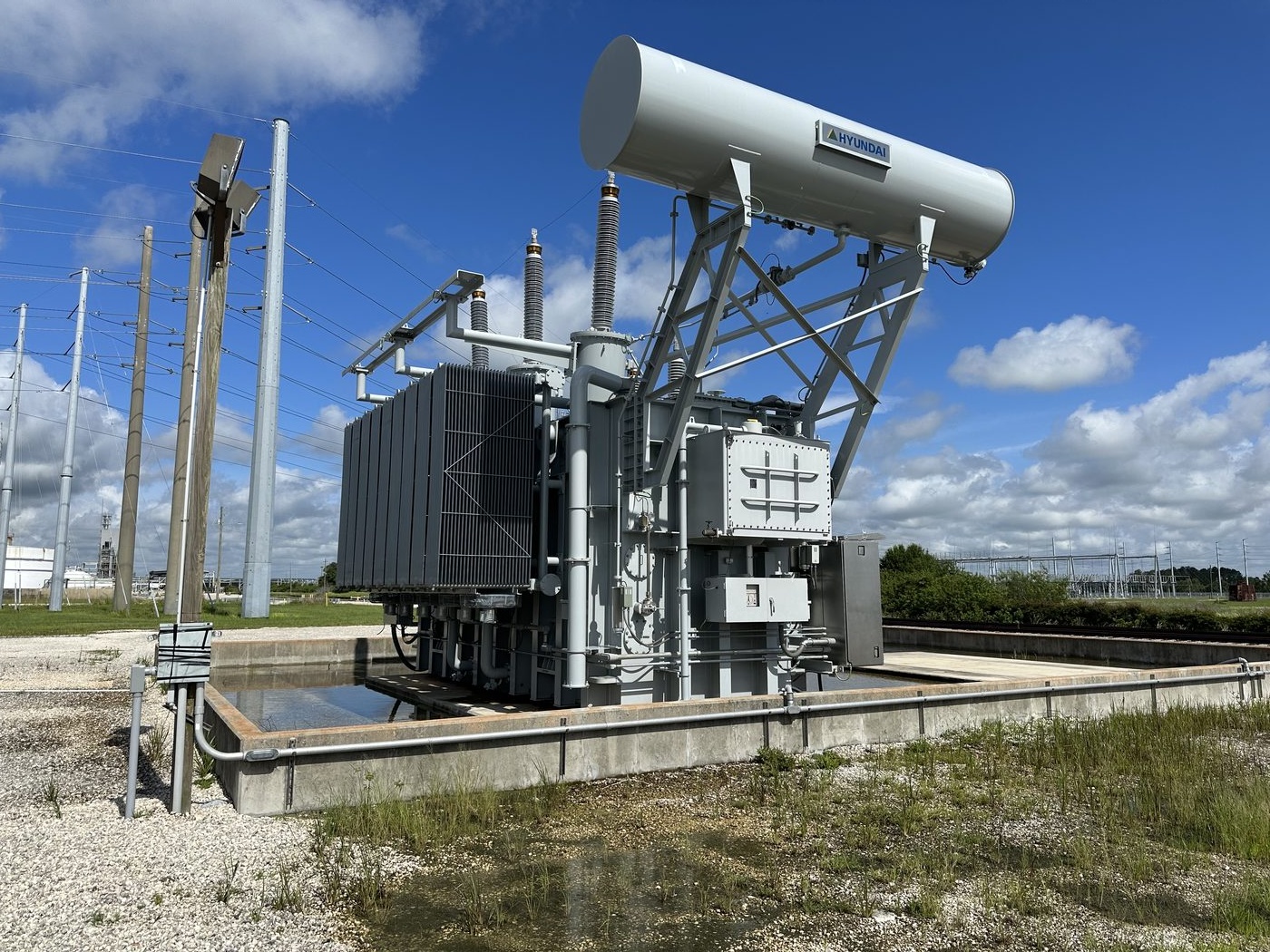
The utility maintained the spare at a regional generating-plant storage facility. Southern Switch held the field services contract and coordinated the entire operation: crane subcontractor, disassembly at the storage site, transport to the failure site, removal of the failed unit, and reassembly and testing of the replacement.
- →Next-day field mobilization
- →Contracted and coordinated crane subcontractor for all lifts
- →Complete disassembly of spare unit at the storage site (bushings, conservator, radiators, external components)
- →Transported main tank and all components from the storage site to the installation site
- →Removed failed unit from its pad
- →Set and fully reassembled replacement autotransformer on the pad
- →Replaced damaged bus and one structure destroyed in the failure
- →Performed complete apparatus testing before the utility authorized energization
Most utilities keep a spare transformer for exactly this situation, but getting that spare from storage to service is not a simple crane pick. A 230 kV autotransformer travels as a main tank only. Bushings, the conservator and its steel support frame, radiators, oil preservation equipment, everything comes off before transport and goes back on at the destination.
That reassembly has to be correct before any test is run, and the tests have to pass before the unit goes back into a transmission circuit. Managing both, the physical rebuild and the test program, under time pressure is what Southern Switch delivered.
Testing the spare
before it goes live.
A transformer that has been in spare storage needs the same pre-energization test suite as a new installation. Storage conditions, humidity, temperature cycling, handling during transport, can all affect insulation condition. The tests below were performed on the replacement unit after installation and before the utility completed protection and control checkout and returned the unit to service.
Winding-to-ground and winding-to-winding megohm readings with polarization index. Flags moisture ingress from storage. Critical on any unit that has been sitting idle, insulation condition in storage is not guaranteed.
Ratio tested at all tap positions against nameplate data. Confirms winding integrity and that handling and transport introduced no internal damage. For an autotransformer, ratio verification also confirms the series and common winding relationship.
DC resistance measured per winding and per phase. Phase-to-phase balance confirms no loose connections or contact degradation at the tap changer that may have developed in storage.
No-load exciting current per phase. Core deformation from shipping or handling shows here. A transformer with a shifted or damaged core is not a unit you want in a 230 kV circuit.
Capacitance and power factor on windings and bushings. Moisture in insulation shows in power factor before it shows in megohm readings. Elevated power factor on a spare unit coming out of storage is a finding that stops energization until the cause is understood.
Fluid samples taken for dielectric strength, moisture content, and dissolved gas analysis. A clean dissolved gas profile on a spare confirms the unit has not been experiencing internal heating, arcing, or partial discharge during storage.
Replacement tested
and returned to service.
The replacement unit passed apparatus testing. Southern Switch delivered the test data and documentation to the utility. The utility completed protection and control checkout and returned the 230 kV autotransformer to service, restoring transmission capacity during the peak of Florida’s summer load season.
The failed unit was removed from the pad and disposed of by the utility. What was left on the pad when Southern Switch arrived was a total loss. What was energized when the work was done was a tested, documented, serviceable transformer.
Call (914) 582-9346, 24/7. We coordinate the crane, the transport, the installation, and the testing. You focus on switching and protection.